 Join our mailing list
 The Museum
Current Exhibitions


Seasons in Cosmos: Works by Diana Shuiu Wong
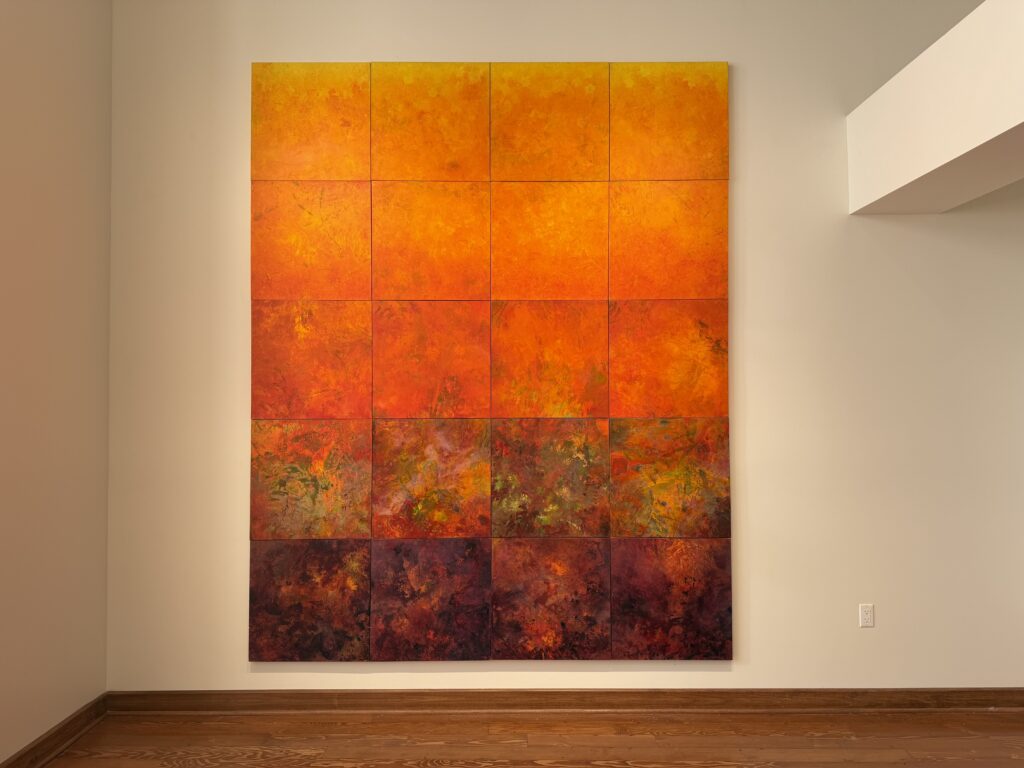
The Chinese American Museum presents Seasons in Cosmos: Works by Diana Shuiu Wong, the first exhibition to occupy the museum’s newly expanded gallery space. The exhibit will be on view from May 28th, 2026 to April 25, 2027.
Spanning more than seven decades, Wong’s body of work is emblematic of her interest in the intersection between time, nature, and human impact on environmental uncertainty.
Born and raised in Hong Kong, Wong began studying calligraphy and painting at age 5 and later studied in Rome, London, and New York. She eventually settled in Los Angeles and opened her own gallery in Santa Monica. Known for blending traditional Chinese and contemporary Western aesthetics in her abstract works, Wong also incorporates film, sound, music, and dance into her gallery installations.
The Icon: Anna May Wong
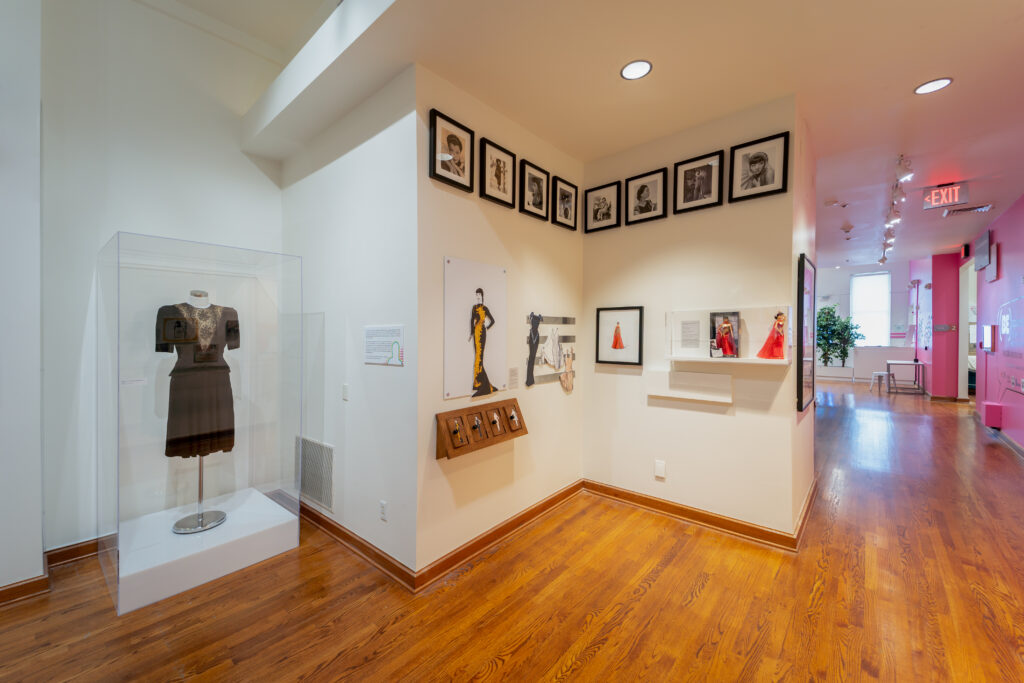
More than 100 years after launching her film career, Anna May Wong remains a Hollywood legend as the first Chinese American movie star. Wong, who appeared in more than 70 films, plays, radio shows, and television programs, paved the way for the Asian American actors who later followed in her footsteps. She also achieved a number of groundbreaking milestones in her four-decade career. Often typecast in stereotypical roles, Wong fought against racist portrayals of Asians and spoke out about the limited opportunities for Asian actors in Hollywood, in comparison to her white counterparts who were recruited to play Asian characters in yellowface.
The Icon: Anna May Wong, open from May 16, 2025 – August 30, 2026, pays tribute to the trailblazer and icon who challenged conventions against all odds.
(Be)Spoken: Poems from Our Asian American Voices

CAM presents our newest exhibition, (Be)Spoken: Poems from Our Asian American Voices, open from May 16, 2025 – September 6, 2026. The exhibition is co-curated by rapper and poet, Jason Chu and features seven spoken word artists: Tanzila “Taz” Ahmed, arianna lady basco, Emdash, Sun Luu, Michelle Myers, STEADY, and Catzie Vilayphonh.
This dynamic show spotlights spoken word artists by blending their poetry, performance, and storytelling into bold imagery and installation. (Be)Spoken dives into stories of identity, resilience, justice, and community. With each voice, the exhibition shines a light on the complex, evolving narratives of Chinese American and AAPI communities—past, present, and future.
Origins: The Birth and Rise of Chinese American Communities in Los Angeles
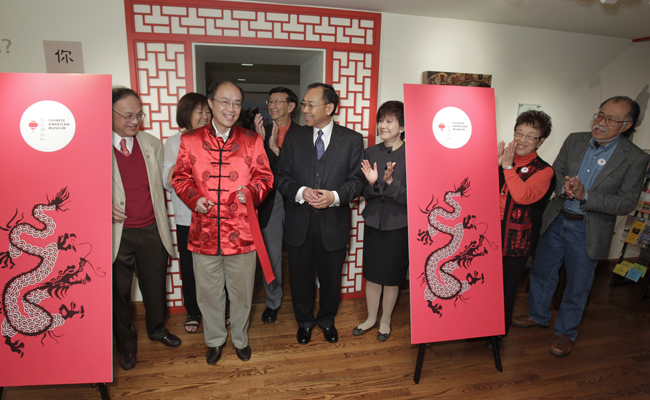
Origins: The Birth and Rise of Chinese American Communities in Los Angeles, a permanent, cutting edge exhibition celebrating the growth and development of Chinese American enclaves from Downtown Los Angeles to the San Gabriel Valley.
Journeys
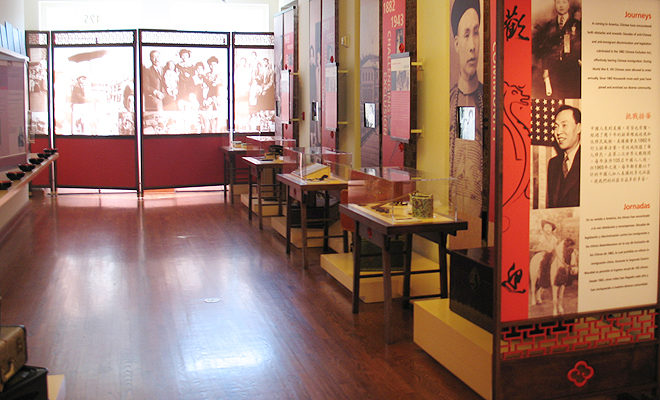
This exhibit narrates Chinese immigration to the United States with an emphasis on community settlement in Los Angeles. The display is outlined into four distinct time periods. Each period is defined by an important immigration law and event, accompanied by a brief description and a short personal story about a local Chinese American and their experiences in that particular historical period.
Sun Wing Wo General Store and Herb Shop
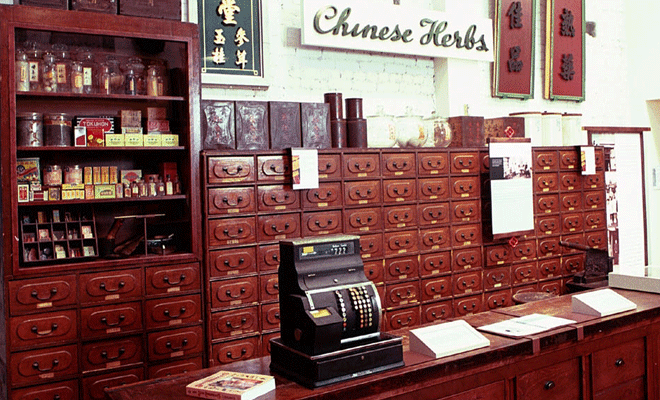
This exhibition is a recreation of an actual store that was housed in the Garnier Building in the 1890’s. The Sun Wing Wo store opened in 1891 and remained in this building until 1948. The store was a multi-purpose space that showed how self-sufficient the Chinese were and had to be due to racism and discrimination, while also being responsive to the needs of their community. Even though the store predominantly served the Chinese, there were European, Japanese, and Mexican Americans who also came to purchase Chinese merchandise.
On one side of the gallery, people can find merchandise sold at the general store such as food, clothing, furniture, firecrackers, and dishes; they can also find western products that were popular at the time such as cigars and perfumed soaps. The store also provided banking, postal, and letter writing services for the community.
On the other side of the gallery, the Museum recreated the herb shop where Chinese could practice their traditional form of healthcare – Chinese Medicine. There were acupuncture services and prescriptions of herbal remedies provided.